

Home
About Us
Medical Services
Counseling and Wellness
Sports Medicine
Virtual Health Library
Documents and Forms
Search
Needle Stick/Exposure
Events Calendar
Prescription Refills
Insurance Information
 
Contact Us Appointments Hours Health Fee and Charges Who's Eligible
 
Home arrow Medical Services arrow HIV Testing
 
HIV Testing
HIV Testing
  Print E-mail

Campus Health Services through the Counseling and Wellness Services CHECS Clinic - Carolina Health Education Counselors for Sexuality (CHECS) offers confidential, individual sexual health counseling appointments for students and provides testing for HIV and Syphilis for UNC students. Call CWS to make an appointment for HIV or Syphilis testing. These are screening tests only and if there is a medical indication for HIV testing, you will need to be seen in the general medicine clinic and there is a charge for all lab test performed.

Testing for all other STIs at Campus Health Services is through the general medicine clinics. Call CHS Central Appointments to make an appointment for all other STI tests. 

  • Blood test
    A small sample of blood is taken from the inside of your arm to test for HIV antibodies. Results are available in two weeks.
    This test is FREE.
  • Oral test (OraQuick)
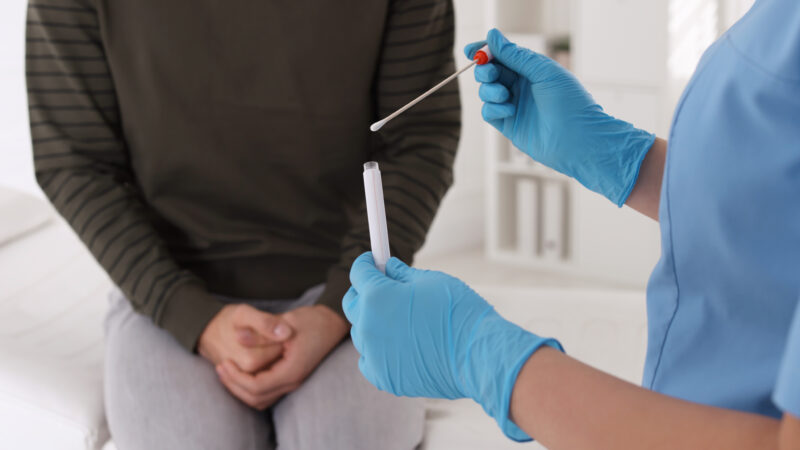
    Oral test (OraQuick Advance Rapid HIV Test) An oral sample is taken to test for HIV antibodies. Results from the OraQuick Advance test are available in 20 minutes.
    This test costs $25


HIV Counseling

AIDS stands for:
    Acquired - it’s not inherited
    Immune
    Deficiency - a breakdown in the body’s system that fights diseases
    Syndrome - a group of symptoms or related health problems that characterize a disease.

AIDS is caused by a virus called HIV: the Human Immunodeficiency Virus.

Having HIV and having AIDS is not the same thing. When a person becomes infected with HIV, he/she may look and feel healthy for many years. During this time, a person who is infected can pass HIV to other people. The only way to find out if you have HIV is to get tested.

HIV works by weakening the immune system making it increasingly difficult to fight off infection. As HIV disease continues and the immune system wears down, viruses, bacteria, fungi and parasites begin to take advantage of the body’s compromised ability to fight infection. These complications are called "opportunistic infections." People with HIV infection are defined as having AIDS only when the strength of their immune system falls below a certain level or when they develop one of these AIDS-related opportunistic infections.


Protected Confidentiality

In conjunction with the State Department of Human Resources, the Counseling and Wellness Services at Campus Health offers "Protected Confidential" HIV testing. Call Counseling and Wellness Services for an appointment (see the "Contact Us" section).

"Protected confidential" testing means that students' names are not recorded in the scheduling or billing records for HIV appointments, but students are asked to sign a consent form which states that they agree to be tested. If the test result is negative, the consent form is given back to the student. If the test is positive, the name is reported to the state health department as required by North Carolina law. This information is NOT stored in the student’s medical record, and NO medical record is kept, regardless of the test result. Here is what happens when you come in for your appointment: You will speak with a counselor who will explain the test, help you assess your risk, provide answers to your questions, and administer the test.


Available Tests

There are two kinds of HIV tests available at the Counseling and Wellness Services. Both involve pre- and post-test counseling.

Blood Test
  • A small sample of blood is taken from the inside of your arm.
  • This blood is used to run a series of two tests.
    • HIV Antibodies test
      • The first test looks for HIV antibodies. You need to wait at least three months from the time of your last risk for HIV infection in order to get an accurate antibodies test result. Some people need to wait six months to allow their bodies time to develop antibodies to HIV.
    • PCR test
      • The second test is called a PCR test. It uses DNA amplification to look for the HIV virus. This test can detect an acute HIV infection approximately 14 days after a specific risk for HIV infection. Any positive PCR tests must be confirmed with an antibodies test, but if you are concerned about a specific risk encounter within the last three months, the PCR test will allow you to know whether you have been infected with HIV much sooner than the antibodies test will. Note: The PCR test is only available through clinics that use the state laboratory to test blood samples for HIV. It is not currently available statewide.
  • Results are available in 2 1/2 to 3 weeks. All HIV results are provided in person by one of the CHECS counselors, regardless of the type of test done or whether the results are positive or negative.
  • A blood test is FREE.

Oral test (OraQuick Advance Rapid HIV -1/-2 Antibody Test)
  • OraQuick Advance tests for the presence of antibodies to HIV in oral fluids. 
  • After pre-test counseling, an oral fluid sample will be collected on a test device.
  • The results of this test will be available in only 20 minutes.
  • OraQuick Advance has been proven to be more than 99% accurate for detecting HIV antibodies.
  • Because of the "window period," or the time period between when a person is actually infected with HIV and when antibodies to HIV can be detected in this test, testing after at least three months since your last HIV risk provides more accurate results.
  • The cost of OraQuick Advance is $25.00, which can be paid by cash, check, credit card (Mastercard or Visa), or with a OneCard account at the time of the visit.
All HIV results are provided in person by one of the CHECS counselors, regardless of the type of test done or whether the results are positive or negative.

If you or your partner are out of the UNC area and want to get tested for HIV, call 1.800.342.AIDS for the location of a testing site in your area.

Anonymous Testing in North Carolina
State law requires that all HIV testing sites in North Carolina perform confidential, but not anonymous tests. Therefore those students who want an anonymous test must have the test done in another state or use a home testing kit.

Most drug stores carry Home Access HIV testing kits. This is an anonymous test that you perform yourself by taking a blood sample from a finger prick. The instructions, mailing envelope, and ID number are provided, and you can obtain your results by phone by using the number you are given in the testing kit. Call the National CDC AIDS Hotline at 1.800.342.AIDS for more information about this test.

You can also find more information about the home test or order the test online at the Home Access Health Corporation (HAHC) website.

Visit the Virtual Health Library: HIV and AIDS to learn more.
Last Updated ( June 16, 2008 )